Key Takeaway
Chrono and DX both serve engineering leaders and solve different problems. Chrono automates SR&ED documentation and R&D time categorization from your dev tools. DX measures developer experience through surveys and flow metrics. Pick Chrono if tax credits and budget are the priority, DX if developer sentiment is.
These two tools get compared a lot, and they’re answering different questions.
DX asks how it feels to work on your team. It finds friction, handoff delays and the patterns that wear people down. Chrono asks what your engineering time produced: delivery, cost, tax credits and where the budget went.
Both questions are worth asking. This article covers where each tool is stronger, and where we’d tell you to pick the other one.
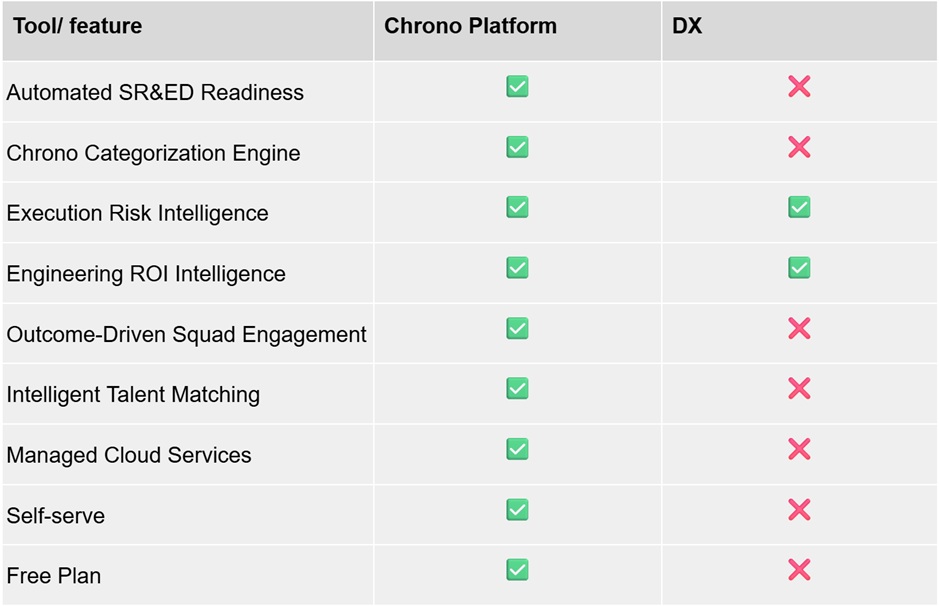
Chrono vs DX at a glance
What is Chrono Platform?
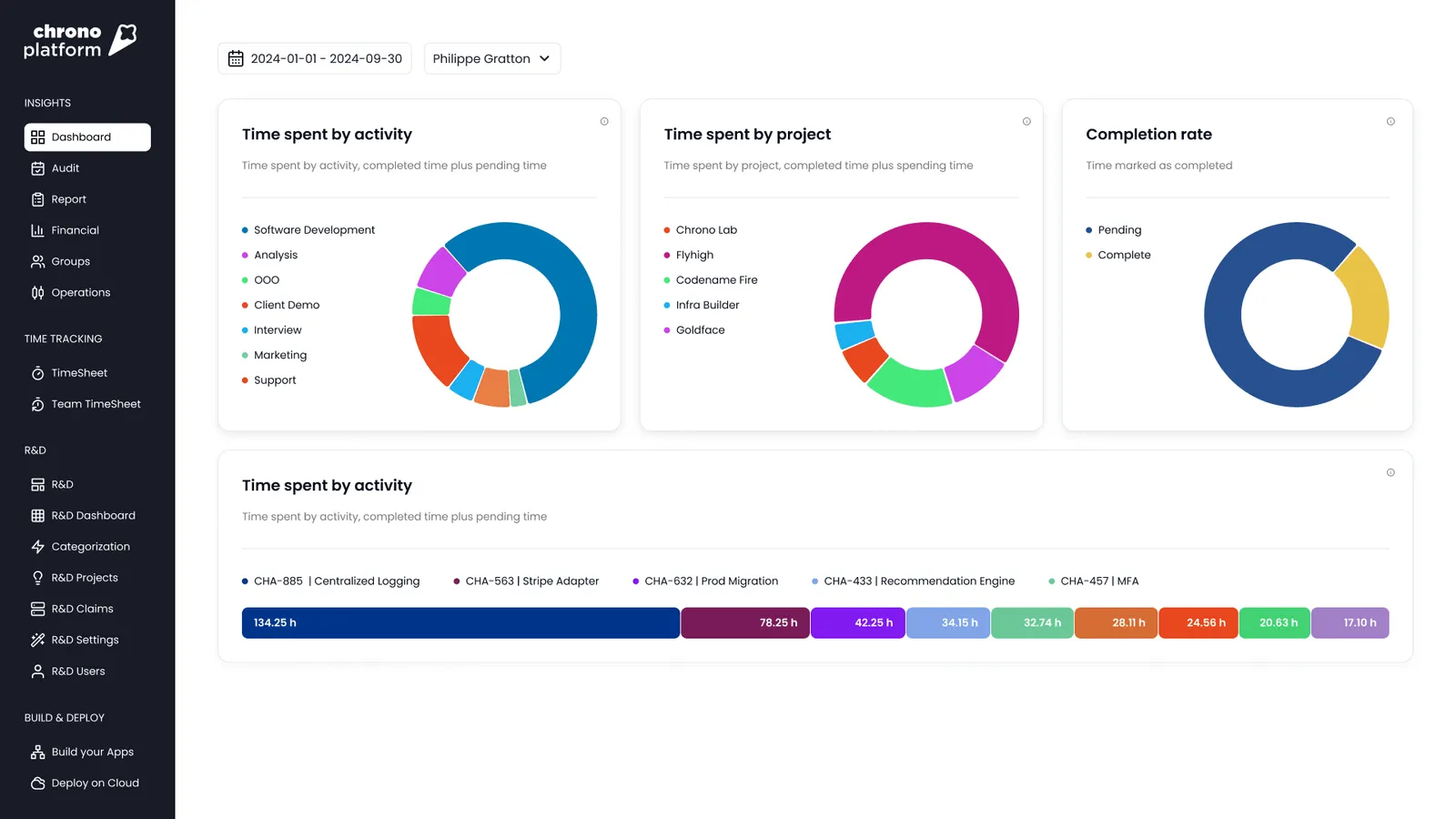
A platform that ties engineering effort back to business results. It tracks delivery, cost and tax eligibility together, shows time allocation and project status on a live dashboard, lets you reallocate resources mid-sprint, and maps work to R&D tax credit categories.
The case for working this way is well established. 64% of firms say improving operations with real-time data is vital, and 77% of organizations using real-time analytics report better financial performance.
What is DX?
A developer experience platform. It measures flow efficiency and handoff delays, code review speed, context switching, and how much time goes to waiting versus actively coding. It benchmarks you against industry peers.
DX is built to catch burnout and retention problems early, and it’s genuinely good at that. It deliberately doesn’t touch financials.
Where do they differ?
SR&ED automation
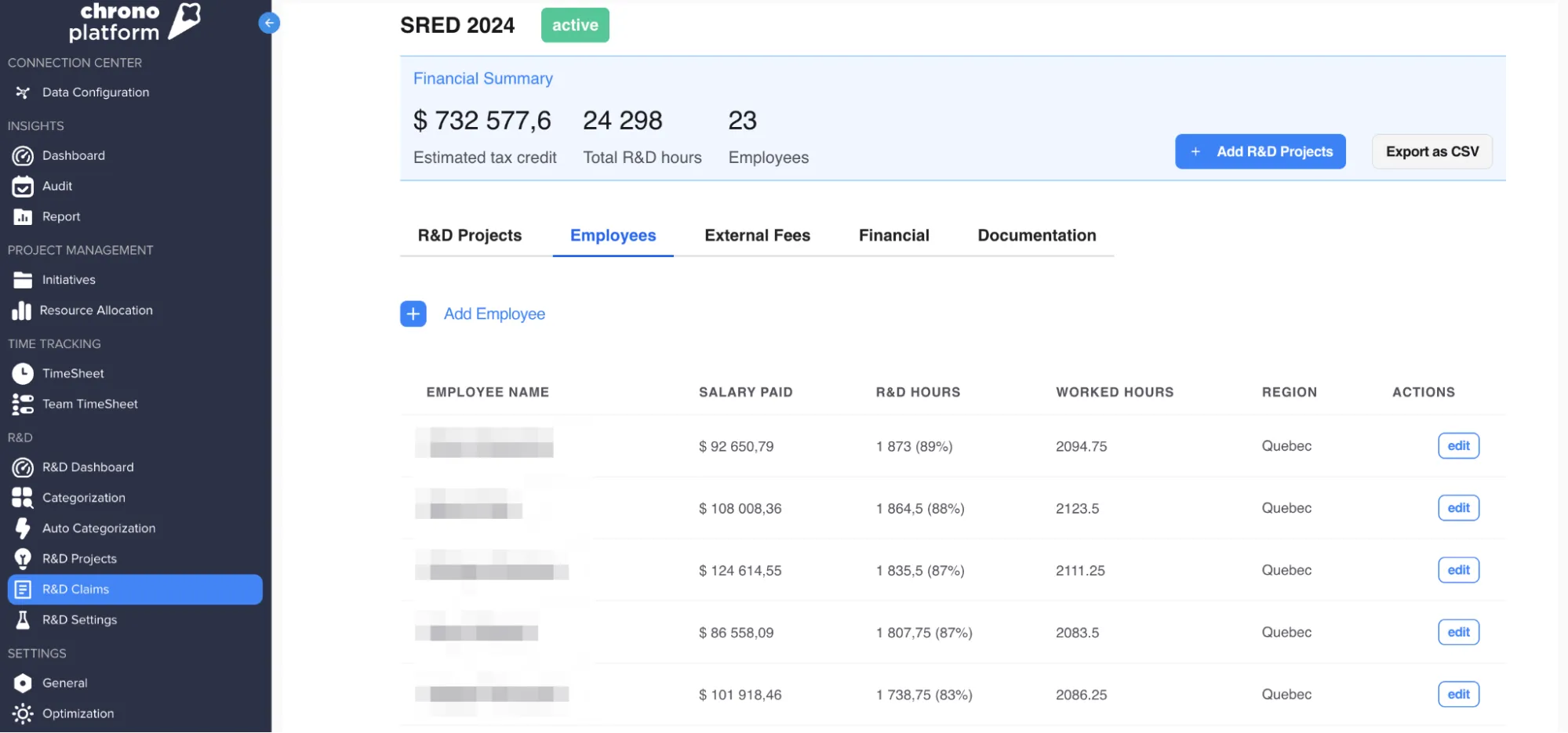
Chrono automates SR&ED documentation. It maps engineering work to tax-eligible categories using time tracking and rule-based classification, then exports in claim-ready formats.
DX doesn’t do this at all, and doesn’t claim to.
Time categorization
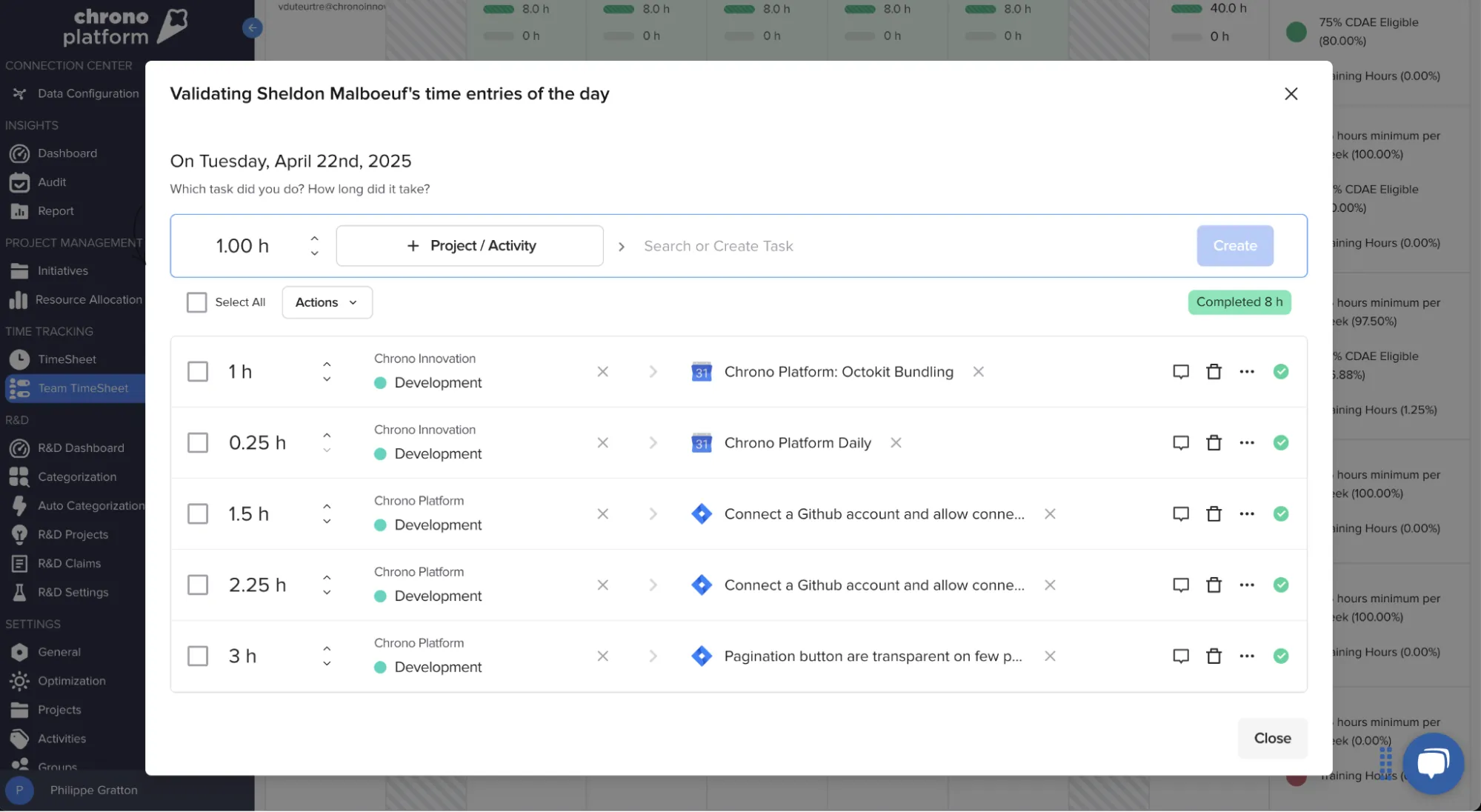
Reconstructed from real tools. Chrono derives time from Jira, calendars and task data rather than asking anyone to log it.
That matters because the interesting number isn’t coding time. The typical software engineer spends 41% of their work time actually coding. Chrono shows you the other 59%: meetings, rework and overhead.
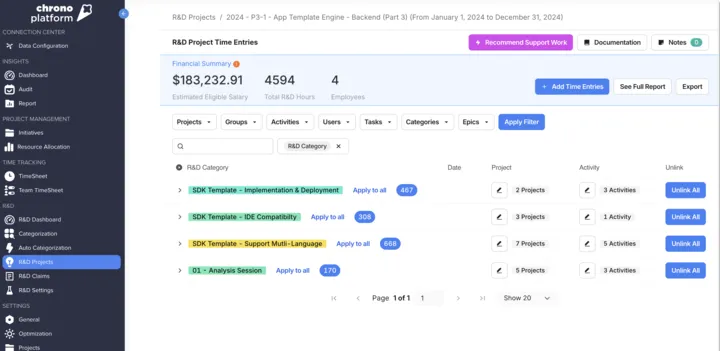
Rules that change retroactively. You can update how work is categorized as priorities shift or tax eligibility rules change, and reclassify historical data against the new rules.
This is a real limitation in DX. Once data is collected, the categorization is fixed, so reporting drifts as your definitions move.
Delivery risk
Chrono connects delivery data, automation signals and business objectives, so risk surfaces before a delay becomes an overrun. It reads CI/CD pipeline data, deployment activity, incident alerts, capacity and initiative alignment.
The problem is worth quantifying. One report found deployments were 26% more likely to be delayed than delivered early, costing companies roughly $145,000 a year. Most organizations deploy once every 29 days, and when delays hit they add an average of 3.8 months.
DX surfaces developer-level signals well. It doesn’t connect them to business-level execution risk.
Financial visibility
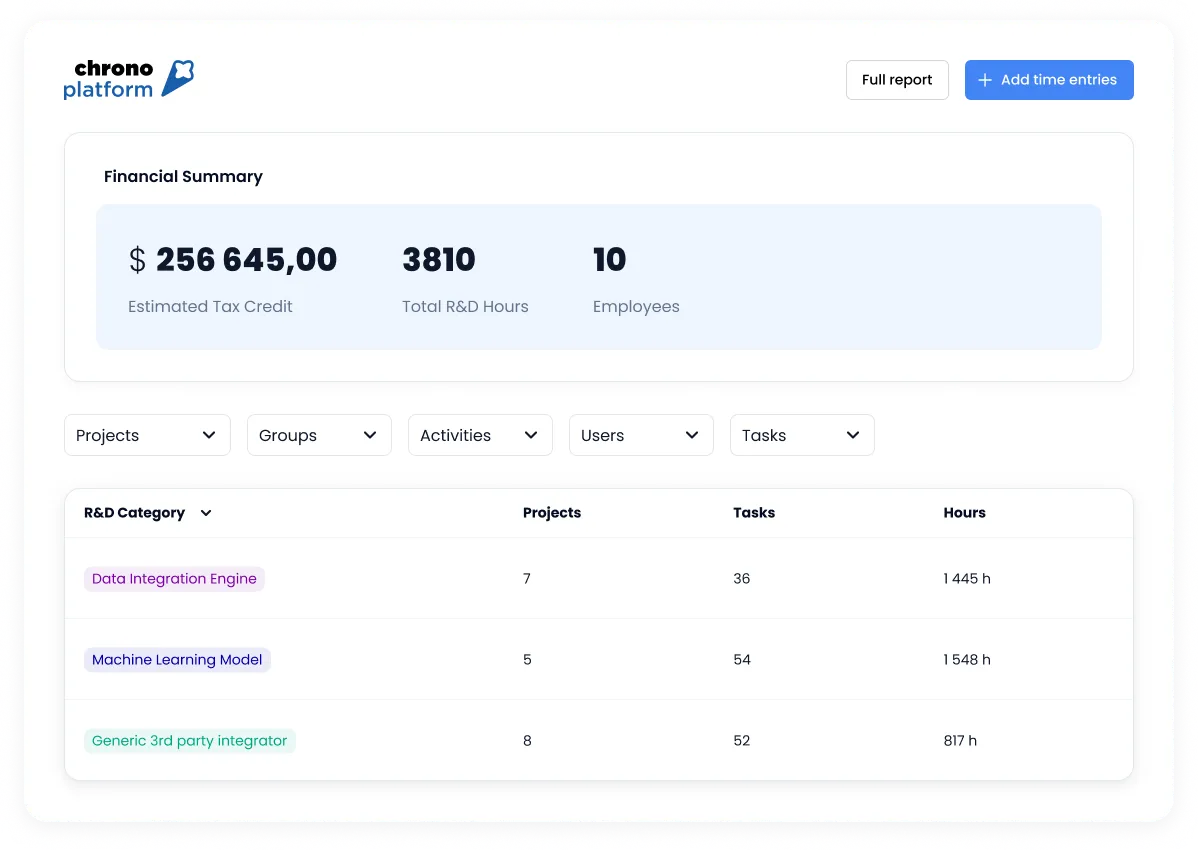
Chrono provides cost center tracking, R&D eligibility, budget trends, capacity and overwork detection, and project cash burn.
This solves a real problem: 40% of CFOs don’t fully trust their company’s financial data, and 37% of small businesses spend one to three days just assembling accurate figures.
DX skips financials entirely. That’s not a flaw, it’s scope. It was never built for that job.
Outcome tracking by squad
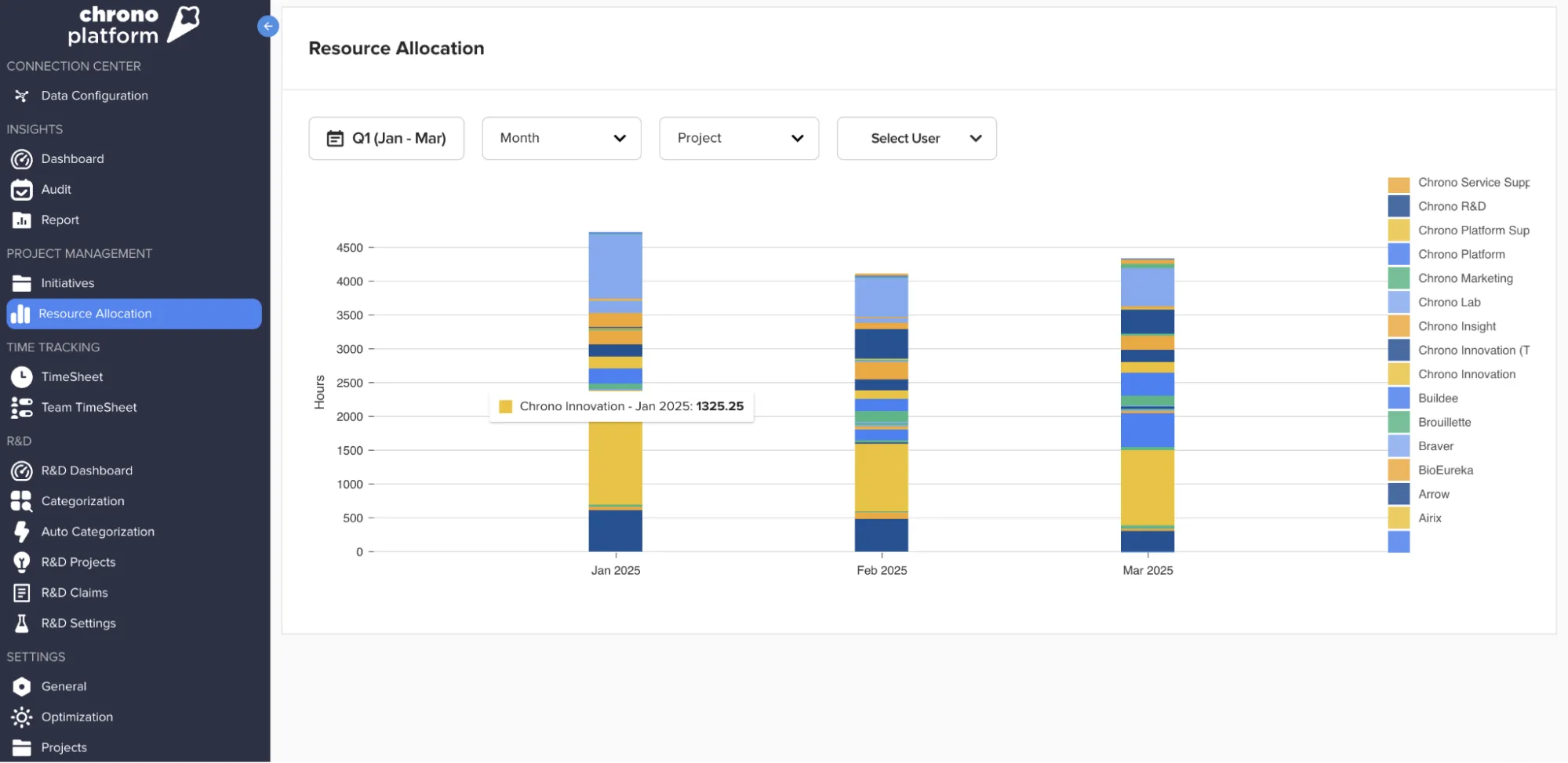
Chrono segments by team, project, role or initiative, so you can see which effort produced results, spot overwork patterns and rebalance.
DX covers team health and internal flow well, and stops before mapping squad work to business outcomes.
Hiring and capacity
Chrono shows current activity and capacity, skill gaps, overload indicators and objective hiring signals, and it offers technical recruitment from a pre-screened candidate pool.
Hiring is hard enough to be worth tooling. A SHRM survey of 2,366 HR professionals found 37% of companies struggled to fill engineering and architecture roles, and 90% of hiring managers report difficulty sourcing skilled candidates.
Chrono also provides development capacity on demand, drawing on vetted engineers matched to your stack and your measured gap. Over 55% of software projects fail due to inadequate resource planning, which is the problem this addresses.
DX doesn’t cover recruiting, workforce planning or capacity.
Managed cloud
Chrono offers fully managed CI/CD, cloud infrastructure management, 24/7 monitoring and multi-cloud support across AWS, GCP, Azure and DigitalOcean. Downtime can exceed $9,000 per minute, and millions per hour in high-impact sectors.
The Startup tier covers a managed low-cost cluster, uptime checks, basic logs, standard alerting and business-hours incident response. The Scale-Up tier adds full infrastructure management, 24/7 incident response, advanced monitoring and direct DevOps support.
DX doesn’t offer managed cloud or CI/CD.
Setup and pricing
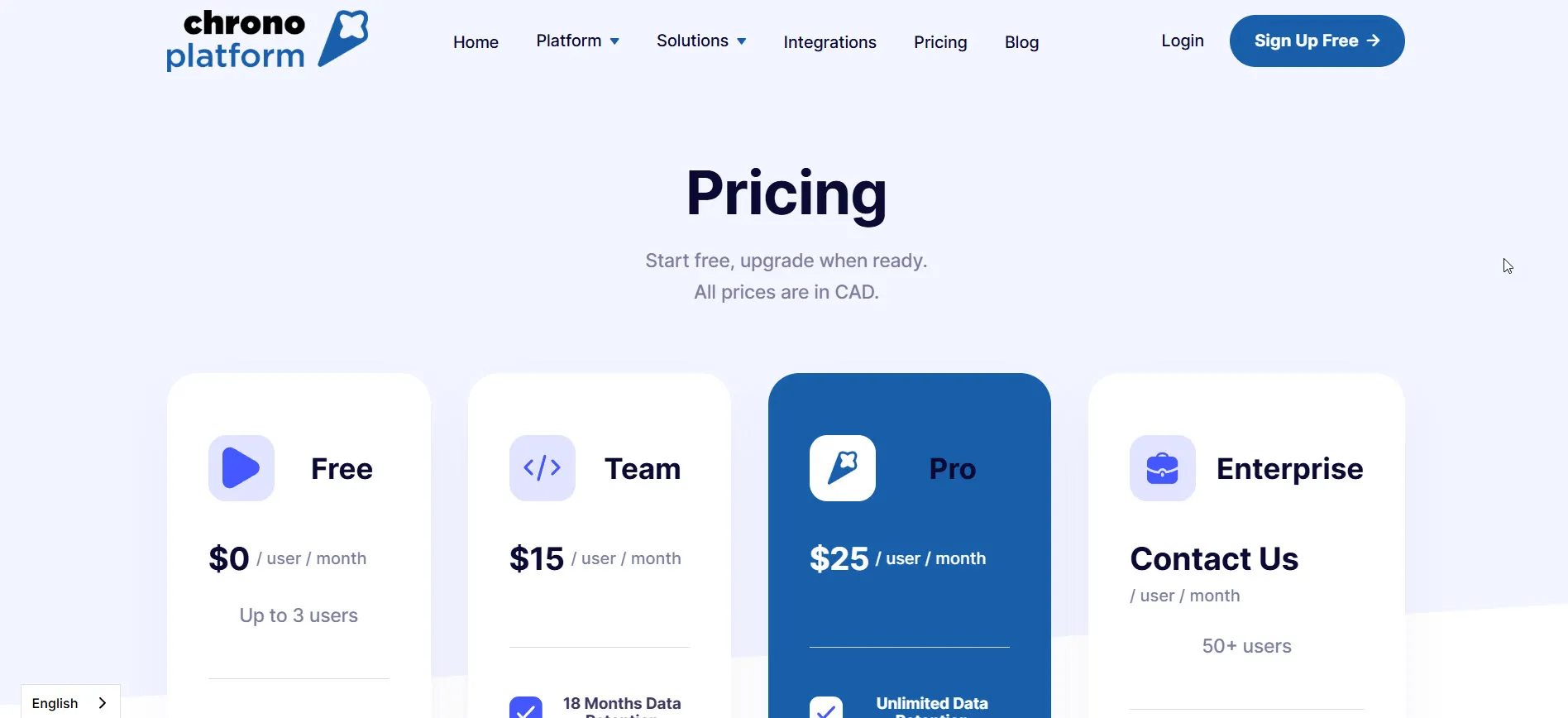
Chrono is self-serve. Connect Jira, a calendar and your repositories, and you’ll see time breakdowns, delivery signals and cost mapping within minutes. There’s a free plan for up to three users with full access to core features.
DX runs a guided setup through their team, on a paid model with pricing that isn’t always public.
Pros and cons
Chrono is strong at: automated R&D tax credit work, passive time tracking with no manual logging, real allocation metrics, retroactive recategorization as rules change, built-in hiring and capacity, and a free tier for evaluating it without a sales call.
Chrono is weaker at: morale-focused coaching, where its structured approach is the wrong shape. Its recruitment features may also duplicate what your HR systems already do.
DX is strong at: blocker and satisfaction signals, team-level flow optimization, readable dashboards, and supporting coaching conversations.
DX is weaker at: anything finance or C-suite facing. It leans heavily on surveys and sentiment scoring, which some teams distrust. Custom workflows are fiddly to configure, integration gaps need manual cleanup, and individual-level data is easy to misread.
Which should you pick?
Choose Chrono if you own a budget, carry delivery targets, and have R&D credits on the table. It shows where time and money went, flags delivery risk early, and turns SR&ED from a March project into a background process.
Choose DX if your immediate problem is team morale, retention or flow, and your finance reporting is handled elsewhere. It’s better than Chrono at that job.
Run both if you have the budget. There’s little overlap, and the combination covers the two questions properly.
Chrono is free for up to three users, so you can connect your own data and check the answer yourself without a sales call.
Frequently Asked Questions
What’s the biggest difference between Chrono and DX?
Chrono connects engineering activity to money: costs, R&D tax credits, budget tracking and delivery risk. DX measures developer experience through surveys, flow efficiency and sentiment. If your CFO needs numbers, Chrono. If your VP of Engineering needs morale data, DX.
Can I use both?
Yes, and some organizations do. DX handles satisfaction and flow. Chrono handles financial visibility, SR&ED automation and delivery risk. The overlap is small enough that you’re not paying twice for the same thing.
Does Chrono track individual developer productivity?
No. It works at team and project level: workload distribution, time allocation by initiative, delivery risk. No leaderboards, no stack rankings, no individual performance scores.